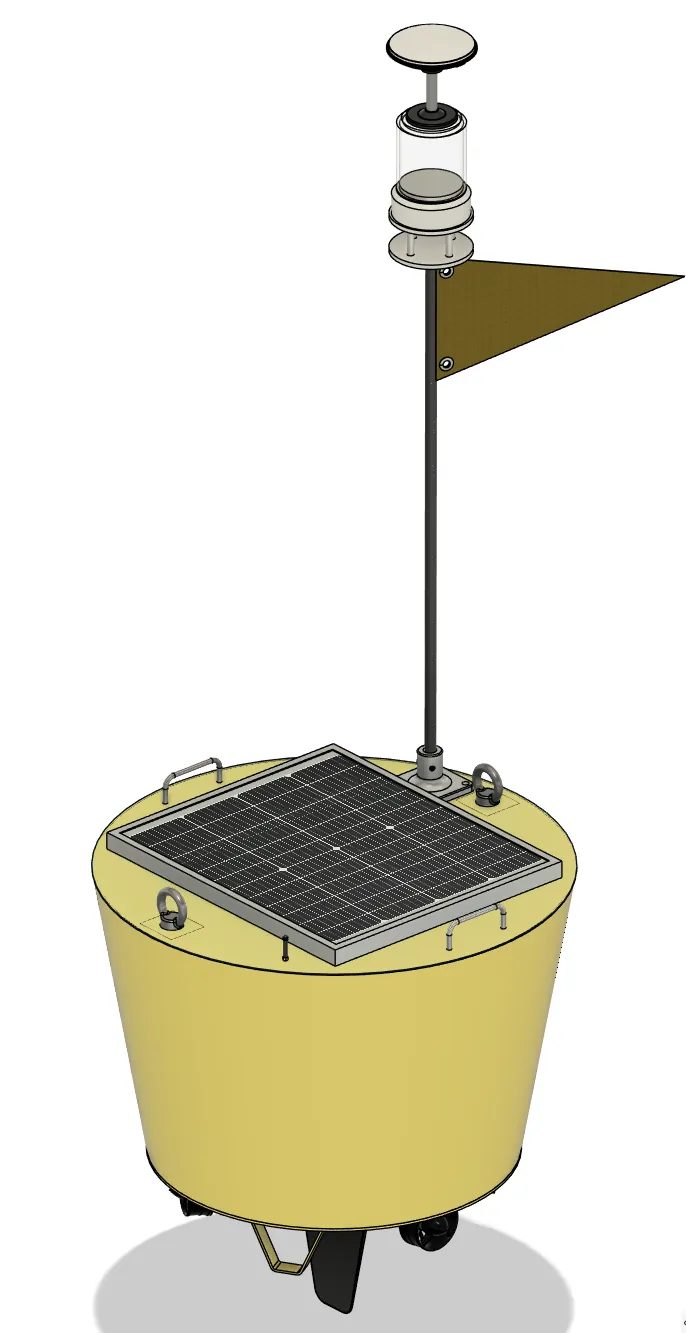
TRITON • OCEAN SENSING NETWORK
From Buoy → Network → Fleet
Triton isn’t a toy. It’s a field-deployable ocean science node built to be affordable enough for networks, not just one-off instruments.
WE DO NOT FAIL THE MISSION
Triton isn’t a toy. It’s a field-deployable ocean science node built to be affordable enough for networks, not just one-off instruments.
Triton isn’t a toy. It’s a field-deployable ocean science node built to be affordable enough for networks, not just one-off instruments. The hardware and firmware platform is proprietary, but the environmental data is broadcast openly over LoRa within range — if you can hear it, you can use it.
The goal is simple: remove the cost barrier so more people can do real ocean science.
We’re building the whole stack: the buoy you can actually afford, the mesh that lets nodes cooperate, and the operational path forward — deployment, repair, and scaling.
This is the first step toward a working fleet: ships, service loops, and data infrastructure that makes ocean monitoring normal.
The hardware and firmware platform stays proprietary so the buoy can evolve as a disciplined field system, but the environmental data is broadcast openly over LoRa within range. That means the platform can stay serious while the science stays usable.
In plain English: if your receiver can hear it, the science is yours to use.